BetMGM Launches NBA Injury Protection: How BetDefense Works in 2026
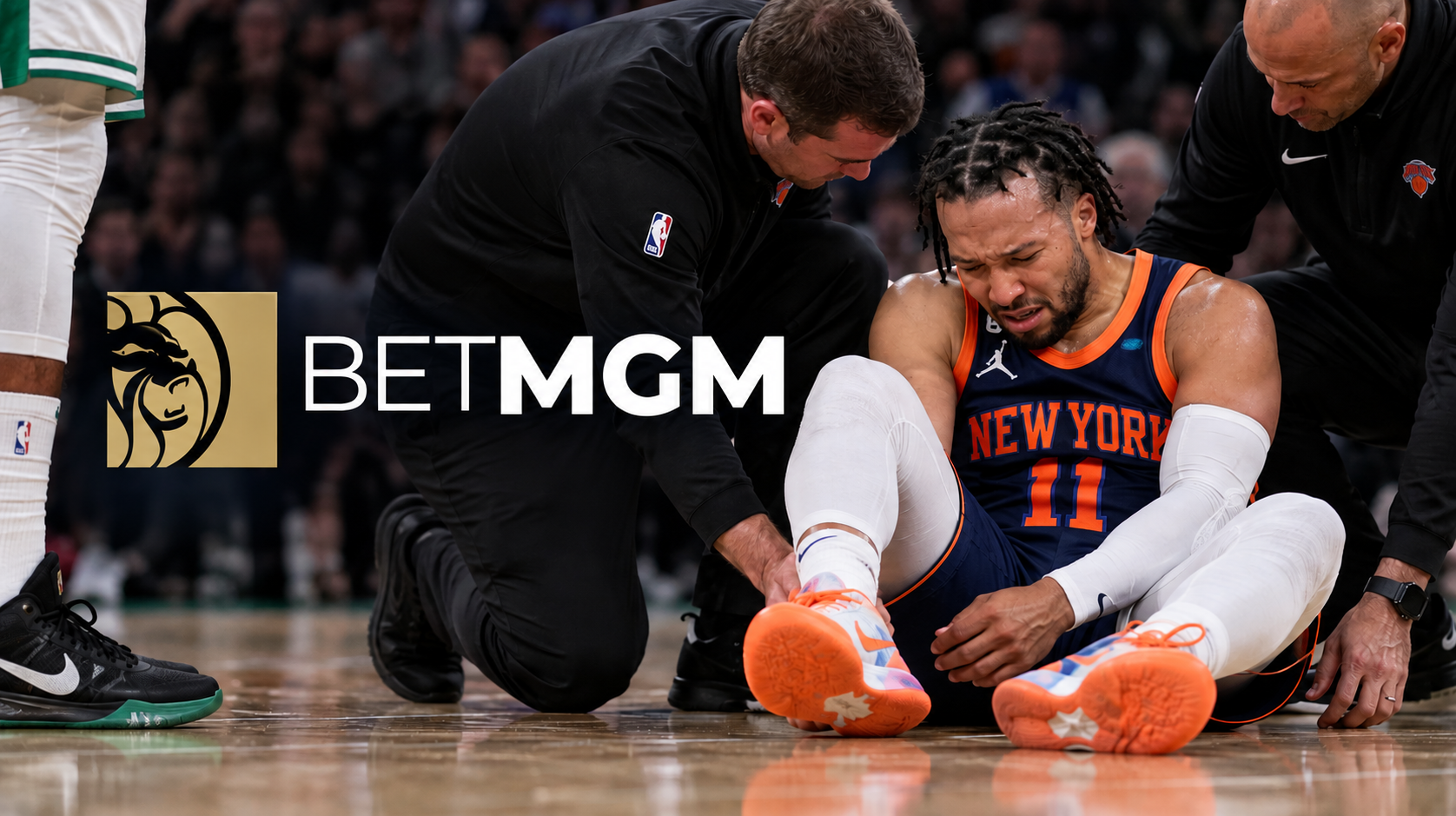
An NBA player prop can look promising for weeks of research and still unravel in the opening minutes of a game. One awkward landing, a trip to the locker room, and a points or rebounds wager may be effectively finished before the first quarter ends.
BetMGM is addressing that problem with BetDefense, a first-quarter injury protection feature for eligible NBA player prop bets during the 2026-27 season.
Announced on October 20, the feature allows qualifying straight wagers to have their stakes returned when a selected player suffers an early injury and is officially ruled out. Parlays and Same Game Parlays receive different treatment: the affected selection is removed and the remaining wager is recalculated.
It is a meaningful change to how certain injury-affected bets are settled. But BetDefense is not blanket insurance against every injury, every losing prop or every bet involving an NBA player.
Understanding those limitations is essential.
What Is BetMGM BetDefense?
BetDefense is BetMGM's injury protection feature covering certain player prop wagers when an athlete is injured during the first quarter and cannot return.
The idea is straightforward. If a player is removed from a game almost immediately, a bettor may have had little opportunity for the selected performance to develop.
For example, imagine taking a player's over 24.5 points before tipoff. He scores six points in the opening minutes, suffers an injury and is officially ruled out for the remainder of the game.
Ordinarily, that over would lose when the game ends.
Under BetDefense, an eligible straight wager can instead be canceled and the original stake returned.
The crucial word is eligible. The protection depends on the injury timing, the player's official status, the type of market and whether BetDefense was available for that particular wager.
BetMGM NBA Injury Protection Rules
BetMGM's published explanation establishes several conditions that must be satisfied.
| Requirement | BetDefense Rule |
|---|---|
| Injury timing | Player must leave due to injury in the first quarter |
| Player status | Must be officially ruled out |
| Return to play | Player must not return |
| Bet placement | Wager accepted before the end of the first quarter |
| Eligible market | Qualifying player props |
| Under selections | Not eligible |
| Weekly specials | Not eligible |
| Straight bet refund | Stake returned within 72 hours after market settlement |
| Parlays and SGPs | Injured player's leg removed; remaining legs recalculated |
| Availability | Depends on jurisdiction and eligible wager |
One of the most important details is that the player must be officially ruled out.
Leaving the court for medical attention does not automatically qualify. Neither does missing several minutes before returning later in the game.
BetMGM also identifies eligible wagers through a BetDefense icon in the bet slip and betting history.
That icon matters more than a general assumption that every NBA player prop is protected.
What Happens If a Player Gets Injured in the First Quarter?
Consider a hypothetical Knicks game.
A bettor places $50 on Jalen Brunson to score over 25.5 points. Brunson starts the game but suffers an injury six minutes into the first quarter and is officially ruled out without returning.
If the wager meets BetDefense requirements, the $50 straight bet would be canceled and the original $50 returned.
That is not a $50 profit. It is the return of the money originally risked.
Now consider a different situation.
Brunson leaves in the first quarter, receives treatment and returns in the second.
BetDefense would not apply simply because the injury initially looked serious. The player returned to the game, so the qualifying injury condition was not met.
The same distinction applies when a player leaves during the second quarter. Even if the injury ends his night, it falls outside the feature's first-quarter protection window.
These examples are hypothetical and do not imply that any specific Knicks player has qualified for BetDefense.
How Does BetDefense Work With Parlays and Same Game Parlays?
The treatment of parlays is one of the most useful aspects of the feature.
Suppose a bettor places a $20 three-leg Same Game Parlay involving:
Jalen Brunson over 25.5 points
Karl-Anthony Towns over 9.5 rebounds
Knicks moneyline
If Brunson suffers a qualifying first-quarter injury, BetMGM's stated approach is to cancel the affected leg and recalculate the remaining selections.
The entire parlay is not automatically refunded.
The Towns rebound selection and Knicks moneyline remain relevant to the outcome.
Importantly, removing a leg changes the wager's combined odds and potential payout. A three-leg parlay cannot retain its original payout after one selection has been voided.
The exact recalculation depends on the wager and its remaining selections.
This distinction is especially important for bettors who frequently combine NBA player props with game outcomes.
What BetDefense Does Not Cover
BetDefense has meaningful restrictions, and some are easy to overlook.
Injuries After the First Quarter
A player injured early in the second quarter may still miss nearly the entire game, but that does not satisfy the first-quarter condition.
Players Who Return to the Game
A player who leaves because of an injury and later returns is not covered under the published rule.
Under Player Props
BetMGM explicitly excludes Under selections from BetDefense.
This makes the protection asymmetric: an eligible Over may qualify, while an Under on the same statistical category does not.
Weekly Specials
BetMGM also excludes weekly special wagers.
Bets Without Confirmed Eligibility
Not every NBA market or jurisdiction is necessarily included.
Bettors should look for the BetDefense icon rather than assume protection applies automatically to every available prop.
Is BetMGM BetDefense Available in New York?
This is an important question for New York bettors.
BetMGM's October 20 announcement confirms the NBA BetDefense feature but also states that it is not eligible in every state or province.
The public announcement does not establish that every New York customer or NBA market qualifies.
New York bettors should therefore check their account, the applicable promotional terms and the BetDefense icon before treating a wager as protected.
For readers evaluating the sportsbook more broadly, our review of BetMGM's New York betting experience and NBA markets covers the platform from a local perspective.
Until availability is confirmed for a particular account and wager, the safest assumption is that ordinary settlement rules apply.
Does BetDefense Actually Make NBA Player Props Better?
BetDefense changes one specific risk associated with player props: losing a wager because the selected athlete is removed almost immediately.
That has value, particularly for Overs that depend on a player accumulating statistics throughout the game.
But it does not necessarily make the underlying bet profitable.
A protected wager can still lose because the player misses shots, gets into foul trouble, plays fewer minutes than expected or simply finishes below the selected line.
There is also the question of pricing.
If one sportsbook offers injury protection but has a less favorable prop line or worse odds, the protection should be weighed against that difference.
Consider two hypothetical prices on the same player:
| Sportsbook | Points Line | Odds |
|---|---|---|
| Sportsbook A | Over 25.5 | -120 |
| Sportsbook B | Over 24.5 | -110 |
If Sportsbook A offers injury protection, that is a useful benefit. But Sportsbook B offers both a lower scoring requirement and a better price.
Without knowing the actual likelihood of a qualifying injury, it would be unreasonable to assume that the protection automatically makes Sportsbook A the better choice.
BetDefense is best understood as a conditional safeguard, not a substitute for evaluating the odds.
Why First-Quarter Injury Protection Matters
Player props have become a major part of modern NBA betting, especially with the popularity of Same Game Parlays.
Unlike a traditional team moneyline, a player prop depends heavily on the availability and playing time of one individual.
That creates a particular vulnerability to early injuries.
BetDefense addresses a narrow version of that problem, potentially preventing an otherwise lost stake when an eligible player exits before the game has meaningfully developed.
It also changes how certain parlays are handled.
Rather than allowing a qualifying injured-player selection to determine the entire outcome, BetMGM removes that leg and recalculates the rest.
For bettors, the most important improvement is greater clarity about how eligible early-injury situations will be settled.
The limitations remain substantial, but the feature provides a useful distinction between an ordinary losing performance and an eligible injury-related outcome.
How to Check Whether a Player Qualifies for BetDefense
BetMGM has also introduced an NBA BetDefense tracker for the 2026-27 season.
The tracker is designed to identify players whose injuries have qualified for the protection.
At the time of the initial October 20 publication, no qualifying players were listed.
Bettors can consult the official BetMGM NBA BetDefense tracker for updates.
The tracker is a useful reference, but the eligibility of an individual wager still depends on the applicable terms and the customer's account.
Final Verdict: A Useful Protection With Important Limits
BetMGM's NBA BetDefense feature addresses one of the most frustrating scenarios in player prop betting: losing a wager because a player suffers a game-ending injury almost immediately.
For eligible straight wagers, the return of the original stake can prevent an injury-related loss. For qualifying parlays, removing the affected leg allows the remaining selections to determine the outcome.
Those are meaningful changes, particularly for bettors who regularly use player props in Same Game Parlays.
But the first-quarter restriction, official ruled-out requirement, exclusion of Under markets and jurisdiction-specific availability all matter.
NYSafeBets Verdict: BetDefense is a worthwhile feature to understand, but bettors should verify eligibility before placing a wager and continue prioritizing favorable odds and sensible stake management.
Information based on BetMGM's October 20, 2026 announcement. Rules and availability may change. NYSafeBets provides independent editorial coverage and may earn commissions through qualifying affiliate links. Sports betting is for adults aged 21 and older in New York. Gambling problem? Call 1-877-8-HOPENY or text HOPENY to 467369.
BetMGM BetDefense NBA FAQ

Eligible straight player prop wagers can have their original stakes returned when the player suffers a qualifying first-quarter injury, is officially ruled out and does not return.
No. The published NBA protection requires the injury to occur during the first quarter.
BetDefense does not apply if the player returns to the game.
Eligible parlays and Same Game Parlays can have the qualifying injured-player leg canceled, with the remaining selections recalculated.
No. BetMGM explicitly excludes Under markets.
BetMGM states that eligible returned stakes are processed within 72 hours after the applicable market settles.
Availability has not been independently confirmed for all New York customers. BetMGM says eligibility varies by jurisdiction and instructs users to check their accounts and applicable terms.