UFC 331: Joshua Van vs. Alexandre Pantoja 2 Prediction, Odds and Best Bets
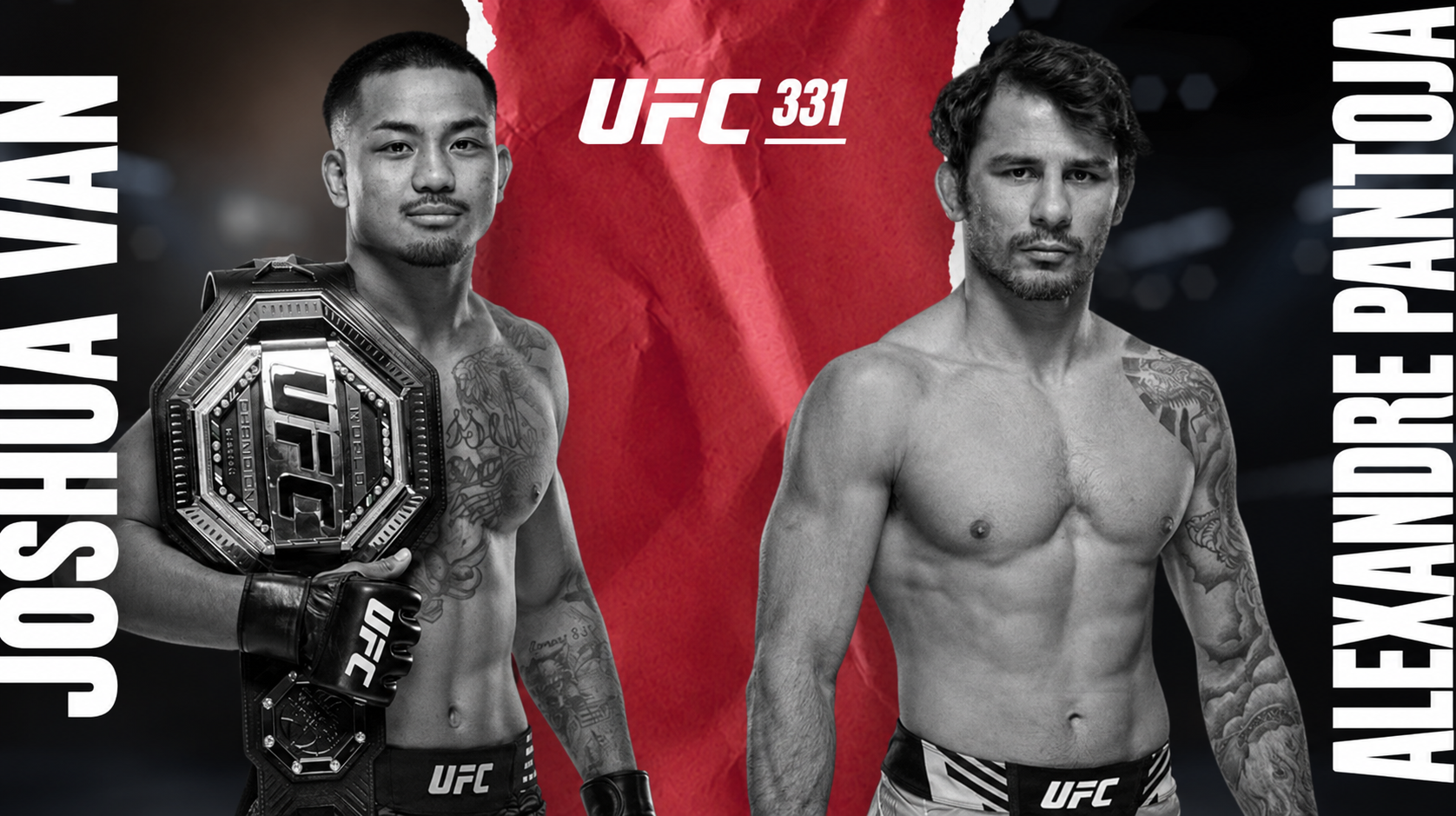
Fight Date: Saturday, September 19, 2026
Venue: Crypto.com Arena, Los Angeles, California
Odds (via BetMGM): Joshua Van -130 (favorite), Alexandre Pantoja +180 (underdog)
Joshua Van and Alexandre Pantoja enter UFC 331 with an unusual problem: their first fight technically produced a winner, but it gave us almost no useful evidence for predicting the rematch.
Van became UFC flyweight champion at UFC 323 when Pantoja suffered a serious elbow injury just 26 seconds into the opening round. The result officially went into the record books as a Van victory, but treating those 26 seconds as evidence that the younger fighter had solved Pantoja would be a mistake.
Nine months later, we know considerably more about the champion.
Van successfully defended the belt against Tatsuro Taira, stopping him in the fifth round after navigating repeated takedown attempts and difficult grappling exchanges. It was the strongest evidence yet that Van’s pressure, durability and offensive output can remain dangerous deep into a championship fight.
Pantoja enters from the opposite direction.
Before the injury, he had won eight consecutive fights and established himself as the dominant force at 125 pounds. His title run included a hard-fought five-round victory over Steve Erceg at UFC 301, followed later that year by a first-round submission of Kai Asakura at UFC 310.
Now 36, Pantoja is attempting to reclaim the championship against a 24-year-old opponent who appears to still be improving.
That makes Joshua Van vs. Alexandre Pantoja 2 far more interesting than simply running back a fight that never really happened.
Van vs. Pantoja 2: Tale of the Tape
| Joshua Van | Alexandre Pantoja | |
|---|---|---|
| 17-2 | Record | 30-6 |
| 24 | Age | 36 |
| 5'5" | Height | 5'5" |
| 65" | Reach | 68" |
| Orthodox | Stance | Orthodox |
| 2 | Previous UFC Title Fights | 6 |
| Boxing and pressure | Primary Strength | Grappling and submissions |
| Houston, Texas | Fighting Out Of | Arraial do Cabo, Brazil |
Pantoja holds a three-inch reach advantage and a substantial edge in championship experience. Van is 12 years younger and enters with fewer professional fights, but he has already shown an unusual ability to maintain his striking pace late into demanding five-round contests.
The central question is whether Van can use that youth and cardio without giving Pantoja the grappling positions he needs.
Watch: UFC 331 Countdown – Van vs. Pantoja 2
The UFC 331 Countdown follows both fighters during their preparation for the rematch and revisits the unusual ending to their first meeting before Saturday’s flyweight championship fight.
Van vs. Pantoja 2 Odds
| Fighter | Moneyline |
|---|---|
| Joshua Van | -130 |
| Alexandre Pantoja | +110 |
Odds (via BetMGM)
At -130, Van’s implied win probability is approximately 56.5%. Pantoja’s +110 price represents an implied probability of approximately 47.6%. Those figures include the sportsbook margin, which is why they add up to more than 100%.
The market is effectively treating this as a competitive championship fight with a slight advantage for the younger titleholder.
That appears reasonable, although bettors should be careful about paying too much for Van’s youth and recent momentum. Pantoja may be the underdog, but he owns the most dangerous single pathway to victory in the matchup.
Moneyline prices may differ between operators as fight night approaches. Our guide to the best UFC sportsbooks and betting apps compares the leading options, available UFC betting markets and current promotions. New York bettors can also check the latest FanDuel promo code and offer details before comparing moneyline, total-round and method-of-victory odds.
Joshua Van’s Path to Victory
Van’s biggest advantage is not one individual technique. It is the combination of youth, durability, boxing volume and his ability to remain dangerous as a fight progresses.
The champion is 12 years younger than Pantoja and has already demonstrated that his offensive output can survive a difficult five-round pace.
His victory over Taira is particularly relevant.
Van was forced to defend repeated takedown attempts, work through extended grappling exchanges and continue applying pressure after spending significant energy defending. Instead of slowing down, he produced his most damaging offense late and secured the fifth-round stoppage.
That performance provides a possible blueprint for this matchup.
Van does not need to completely prevent Pantoja from wrestling. He needs to make the former champion work for every entry, avoid surrendering his back during transitions and return to striking range without allowing extended periods of control.
If he can keep the opening two rounds competitive, the fight may begin to move in his direction.
Van is the faster combination puncher and should carry the greater striking volume. His body work could also become increasingly important if Pantoja repeatedly closes distance and attempts to force clinches.
The longer Van keeps Pantoja working without allowing him to establish dominant positions, the more important the age and cardio difference becomes.
Alexandre Pantoja’s Path to Victory
Pantoja presents something Van has never had to solve for five complete rounds: relentless physical pressure combined with an elite ability to take the back.
The former champion does not need to dominate every minute to create a decisive moment.
He can lose portions of a round at striking distance, force one scramble and turn a small positional mistake into several minutes of control or an immediate submission opportunity.
That is the primary danger for Van.
The champion’s willingness to exchange and scramble is part of what makes him effective, but those same instincts can create openings against a fighter as opportunistic as Pantoja. If Van attempts to stand without controlling Pantoja’s hands or turns away during a transition, the challenger can quickly establish hooks and attack the neck.
Pantoja also owns the experience advantage.
Van has now competed deep into a championship fight, but Pantoja spent years facing the best flyweights in the world with a UFC title at stake. He has won close decisions, survived difficult rounds and consistently found ways to impose himself when fights became physically chaotic.
If this contest is decided by clinches, takedowns and scrambles rather than clean kickboxing exchanges, Pantoja has a realistic route to reclaiming the championship.
Who Has the Striking Advantage?
Van should hold the advantage during sustained exchanges at boxing range.
He throws straighter combinations, changes levels effectively with his body shots and is more likely to win a fight built around consistent striking volume. Pantoja can be dangerous while moving forward, but his pressure sometimes leaves him available for counters.
Van must avoid turning this into an unnecessarily wild fight.
His best striking performance would involve maintaining a responsible pace, attacking the body and forcing Pantoja to shoot from increasingly predictable positions. If Van becomes overconfident and remains in the pocket after finishing his combinations, Pantoja will have opportunities to close distance.
Striking advantage: Joshua Van
Who Has the Grappling Advantage?
Pantoja holds the clearest technical advantage in the fight.
His ability to take the back during scrambles is one of the most reliable weapons in the flyweight division. He does not always need a clean conventional takedown because he can create dominant positions from clinches, reversals and transitional exchanges.
Van’s takedown defense against Taira was encouraging, but defending Pantoja presents a different challenge.
Taira is a more methodical grappler. Pantoja is willing to create chaos and trust his instincts inside fast transitions. Van may successfully defend the initial takedown and still find himself in danger seconds later.
Grappling advantage: Alexandre Pantoja
Cardio and Championship Rounds
This is where Van may possess his most important advantage.
Pantoja has repeatedly shown that he can complete five hard rounds, so this is not simply a question of whether the challenger will become exhausted. The difference is that Van appears capable of maintaining a higher striking output while his opponents gradually slow down.
At 36 and returning from a significant elbow injury, Pantoja may also need to manage his energy more carefully than he did earlier in his championship run.
If the fight reaches the fourth round with Pantoja unable to establish sustained control, Van should become the more effective fighter.
Cardio advantage: Joshua Van
Three Ways Van vs. Pantoja 2 Could Develop
Van Survives the Early Grappling and Takes Over Late
This is Van’s clearest path to victory.
Pantoja is likely to be most dangerous during the opening two rounds, particularly if he can turn the fight into a series of clinches and scrambling exchanges.
Every unsuccessful takedown and extended grappling sequence, however, requires energy.
If Van remains composed, protects his back and forces Pantoja to repeatedly reset, the champion’s speed and striking volume could become increasingly influential in rounds three, four and five.
This scenario most likely produces a Van decision or late stoppage.
Pantoja Takes Van’s Back
This is the possibility that makes Van difficult to trust at a significant favorite price.
Pantoja does not need 25 minutes of control. One poorly handled scramble may be enough.
If Van turns away while attempting to stand, leaves his neck exposed or becomes too aggressive during a transition, Pantoja remains capable of ending the fight immediately.
This is most likely to happen while Pantoja is fresh during the opening three rounds.
The Fight Reaches a Close Decision
Van lands the cleaner combinations at distance. Pantoja answers with clinch control, takedowns and threatening submission attempts. Neither fighter establishes complete control.
That could leave the championship dependent on one or two extremely close rounds.
Damage should favor Van, while control time and positional success may favor Pantoja. Bettors backing either moneyline must account for the possibility of a difficult and potentially disputed decision.
Van vs. Pantoja 2 Prediction
The 26-second ending to the first fight should carry almost no weight in predicting the rematch.
The more relevant evidence comes from Van’s performance against Taira, where the champion demonstrated that he could defend repeated grappling attacks, maintain his composure and still produce damaging offense in the fifth round.
Pantoja remains the more accomplished fighter and the more dangerous grappler. His ability to take the back gives him the clearest finishing route available to either man.
The concern is whether he can consistently force those positions against a younger opponent who should become more difficult to contain as the fight progresses.
We expect Pantoja to have success early. He may secure takedowns, control portions of the opening rounds and threaten Van during transitions. The prediction depends on Van surviving those moments without giving up a submission.
If he does, his pace, body punching and superior late-round output should gradually take control of the contest.
Pantoja may win the more dominant individual minutes, but Van is slightly more likely to win enough of the remaining exchanges to retain the championship.
Prediction: Joshua Van to win
Projected result: Joshua Van by decision
Projected win probability: Joshua Van 54%, Alexandre Pantoja 46%
Best Bet for Van vs. Pantoja 2
Best bet: Fight to go over 3.5 rounds
Playable price: -140 or better
Both fighters have proven five-round durability, and neither is easy to finish under normal circumstances. Pantoja’s submission threat creates early risk, but Van showed against Taira that he can survive sustained grappling pressure without losing his effectiveness late.
Van should also approach the early rounds carefully. He has little reason to engage in reckless scrambles when his strongest advantage may emerge during the second half of the fight.
The over covers the most likely Van decision outcome while also surviving a competitive decision victory for Pantoja.
Van vs. Pantoja 2 Value Bet
Value bet: Joshua Van by decision
Playable price: +200 or better
Van’s moneyline at -130 requires him to win approximately 56.5% of the time to break even. Our projection gives him a slightly lower probability, which means the straight moneyline does not offer clear value at the current price.
Van by decision becomes more attractive at +200 or better.
That bet fits the expected fight pattern: Pantoja creates the more dangerous moments early, Van avoids the submission and then wins enough striking exchanges over the later rounds to retain the title on the scorecards.
Van vs. Pantoja 2 Final Pick
Joshua Van and Alexandre Pantoja are closely matched, and the first fight provides almost no reliable evidence about how the rematch will unfold.
Pantoja is the better submission grappler and may be the more dangerous fighter during the opening rounds. Van is younger, faster at boxing range and more likely to produce his best work during the championship rounds.
The prediction is Van by decision, but the more attractive betting angle is for the fight to last beyond 3.5 rounds.
Final prediction: Joshua Van by decision
Best bet: Over 3.5 rounds at -140 or better
Value bet: Joshua Van by decision at +200 or better
Confidence level: 6/10
Arman Tsarukyan vs. Mauricio Ruffy Prediction
The UFC 331 co-main event presents a more pronounced stylistic contrast than the flyweight title fight.
Arman Tsarukyan enters as one of the most complete lightweights in the UFC. His wrestling is the foundation of his game, but he is no longer simply a takedown-and-control fighter. Tsarukyan combines explosive entries with chain wrestling, positional pressure and some of the most damaging ground-and-pound in the division.
Mauricio Ruffy represents a very different threat.
The Brazilian is a long, creative and explosive striker who can change a fight with one clean connection. Thirteen of his 14 professional victories have come by knockout, and his speed, timing and shot selection make him particularly dangerous while the fight remains at striking range.
Ruffy’s clearest opportunity should come during the opening round. Tsarukyan occasionally has to cross significant distance to begin his wrestling exchanges, and Ruffy is capable of intercepting those entries with knees, uppercuts or straight punches.
The matchup becomes much more difficult for Ruffy once Tsarukyan establishes contact.
Ruffy has made improvements since his loss to Benoît Saint Denis exposed problems in his defensive wrestling, but Tsarukyan represents a considerably more complete and persistent grappling challenge. He can transition between single-leg attempts, body locks and trips without allowing his opponent to fully reset.
Tsarukyan also does not need to force an immediate finish. He can make Ruffy defend takedowns, carry his weight and absorb short elbows until the Brazilian’s explosiveness begins to decline.
This finish against Dan Hooker demonstrates what makes Tsarukyan so difficult to contain. He used his wrestling to remove Hooker’s space, advanced position and eventually converted sustained grappling pressure into a second-round submission.
The five-round format only strengthens Tsarukyan’s advantage. Ruffy has the striking power to punish one poorly timed entry, but he must repeatedly create separation against an opponent who can wrestle at a high pace for extended periods.
Tsarukyan is likely to approach the first round carefully, limit prolonged striking exchanges and gradually force Ruffy toward the fence. Once the Brazilian begins spending more time defending than attacking, the fight should become increasingly one-sided.
Prediction: Arman Tsarukyan to win
Projected result: Arman Tsarukyan by submission in Round 3
Projected win probability: Arman Tsarukyan 78%, Mauricio Ruffy 22%
Best bet: Arman Tsarukyan to win inside the distance
UFC 331 Full Card Predictions
UFC 331 contains several matchups in which style may be more important than record alone. The strongest selections are Tsarukyan’s wrestling against Ruffy, Gable Steveson’s athletic and grappling advantage over Sean Sharaf, and Iwo Baraniewski’s speed and finishing ability against Alonzo Menifield. The lower-confidence picks are Van–Pantoja, Pitbull–Choi and Shahbazyan–Ferreira, where both fighters possess realistic finishing paths.
UFC 331 Main Card Predictions
| Fight | Prediction | Projected Method | Confidence |
|---|---|---|---|
| Joshua Van vs. Alexandre Pantoja 2 | Joshua Van | Decision | 54% |
| Arman Tsarukyan vs. Mauricio Ruffy | Arman Tsarukyan | Submission, Round 3 | 78% |
| Patricio Pitbull vs. Dooho Choi | Dooho Choi | TKO, Round 2 | 67% |
| Gable Steveson vs. Sean Sharaf | Gable Steveson | TKO, Round 1 | 91% |
| Alonzo Menifield vs. Iwo Baraniewski | Iwo Baraniewski | TKO, Round 1 | 72% |
UFC 331 Preliminary Card Predictions
| Fight | Prediction | Projected Method | Confidence |
|---|---|---|---|
| Marlon Vera vs. Charles Jourdain | Charles Jourdain | Decision | 69% |
| Tai Tuivasa vs. Robelis Despaigne | Robelis Despaigne | TKO, Round 1 | 64% |
| Michael Aswell vs. JooSang Yoo | JooSang Yoo | Decision | 62% |
| Ryan Gandra vs. Ozzy Diaz | Ryan Gandra | TKO, Round 2 | 66% |
UFC 331 Early Preliminary Card Predictions
| Fight | Prediction | Projected Method | Confidence |
|---|---|---|---|
| Edmen Shahbazyan vs. Brunno Ferreira | Edmen Shahbazyan | TKO, Round 2 | 61% |
| Casey O’Neill vs. Eduarda Moura | Eduarda Moura | Decision | 58% |
| Giga Chikadze vs. Joanderson Brito | Joanderson Brito | Submission, Round 1 | 74% |
These predictions reflect the most likely winner and method rather than automatically identifying the best betting value. A strong favorite may be the most probable winner on the card without offering an attractive bet at the available price. Bettors should compare the final UFC 331 odds and method-of-victory markets before placing any wager.
UFC 331: Van vs. Pantoja 2 FAQ

Joshua Van is the slight betting favorite at -130, while Alexandre Pantoja is listed as a +110 underdog. The odds suggest a competitive UFC flyweight championship fight rather than a clear favorite.
Our prediction is Joshua Van to defeat Alexandre Pantoja by decision. Van’s youth, striking volume and late-round pace give him a slight advantage, provided he can avoid Pantoja’s submission game during the early rounds.
The best bet is over 3.5 rounds at -140 or better. Both fighters have demonstrated championship-level durability, and a cautious opening from Van could help the fight reach the later rounds.
Yes. Pantoja’s best route to victory is taking Van’s back during a scramble and attacking a rear-naked choke. His submission threat is the main reason Van should not be treated as a heavy favorite.
Joshua Van vs. Alexandre Pantoja 2 takes place on September 19, 2026, at UFC 331 inside Crypto.com Arena in Los Angeles.
Van won their first fight by TKO after Pantoja suffered an elbow injury just 26 seconds into the opening round. Because the fight ended almost immediately, it provided very little evidence about how a complete matchup between them might develop.