More Than 300,000 New Yorkers Chased Just 1,000 $100 US Open Tickets
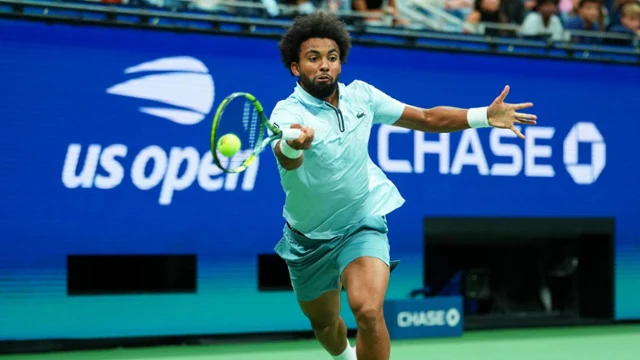 Photo: Shea Kastriner/USTA
For a few minutes Wednesday morning, one of the toughest tickets in New York had nothing to do with getting a good seat.
Three minutes.
That was all it took for the online line to buy one of New York City's 1,000 discounted US Open tickets to stretch to a reported 336,573 places.
The tickets went on sale at 10 a.m. Wednesday, Aug. 26. They cost $100 apiece, were reserved for New York City residents and covered Main Draw sessions at the US Open from Aug. 30 through Sept. 8.
By 10:03, getting one had become a very long shot.
The number, first reported from a screenshot of the ticket queue, needs some context. A place in an online waiting room is not the same as a verified individual buyer. People could enter before their New York City residency was confirmed, and duplicate sessions or automated traffic could have inflated the total.
Still, there is no getting around the scale of it.
For every one of the 1,000 tickets made available, there were more than 336 reported places in line within three minutes.
The $100 US Open Ticket Rush
Tickets released | 1,000 |
Price | $100 each |
Reported queue after three minutes | 336,573 |
Purchase limit | 2 tickets per NYC resident |
Eligible Main Draw dates | Aug. 30-Sept. 8 |
Reported queue-to-ticket ratio | 336+:1 |
It was an extraordinary response to a relatively small ticket release. It was also a useful measure of something harder to quantify: how many New Yorkers still want to attend one of the city's signature sporting events when the price is within reach.
How the $100 US Open Tickets Worked
Mayor Zohran Mamdani and the United States Tennis Association announced the program on Aug. 25, five days before the 2026 US Open Main Draw began at Flushing Meadows.
Beginning the following morning, New York City residents could buy up to two tickets for $100 each on a first-come, first-served basis.
These weren't tickets to a peripheral event.
The allocation included seats inside Arthur Ashe Stadium and Louis Armstrong Stadium, along with grounds passes, for Main Draw matches running through Sept. 8. The tickets covered singles and doubles and couldn't be resold through Ticketmaster.
For anyone who follows the tournament closely — including readers comparing tennis sportsbooks during Grand Slam season — the contrast was hard to miss: Main Draw access at Flushing Meadows was suddenly available for $100.
The question was how much.
New York had its answer almost immediately.
Why $100 Was Such a Big Deal
The timing of the sale mattered.
The US Open entered 2026 with ticket prices moving sharply in the other direction.
The average get-in price for a first-round session was $197, according to TicketData.com figures reported by Reuters shortly before the tournament. That was a 33.1% increase from 2025.
Across all 60 sessions, the average get-in price was $283. For the men's and women's singles finals, it was $534.
Those are get-in prices - the cost of simply getting through the gate - rather than premium-seat averages.
On the resale market, the gap could become much larger. Reuters reported that comparable seats to some included in the city's allocation could sell for more than $1,000.
That made the $100 release more than a modest discount.
For some sessions, it offered New Yorkers access to one of the world's most valuable tennis events for a fraction of what the same night could cost on the open market.
And New Yorkers noticed.
What Does a Queue of 336,573 Actually Tell Us?
Not that 336,573 New York City residents tried to buy a ticket.
That distinction matters.
The online waiting room did not require someone to prove residency before joining the queue, and the raw number could include people using multiple browsers or devices. Questions were also raised about automated traffic.
Residency mattered at checkout, not at the front door of the waiting room.
So the cleanest conclusion is also the simplest: demand overwhelmed supply almost instantly.
Even if a substantial portion of the queue did not represent unique, eligible buyers, 1,000 tickets were never going to satisfy the level of interest the offer produced.
There is another wrinkle.
Each successful New York City resident could purchase as many as two tickets. So 1,000 available tickets did not necessarily mean 1,000 successful buyers. If everyone bought the maximum, the entire allocation could theoretically have been claimed by only 500 transactions.
That makes the size of the queue look even more striking.
The US Open Is Getting Bigger - and More Expensive
There is a reason so many people want in.
The US Open has become one of the biggest annual sporting events in the world, and its footprint in New York keeps growing.
Nearly 1.2 million people attended in 2025, according to the USTA. The tournament says it generates more than $1.2 billion in annual economic impact and employs more than 7,000 people each year. Its television audience reaches more than 200 million people across roughly 200 countries and territories.
For two weeks every summer, the Billie Jean King National Tennis Center becomes its own small city.
Arthur Ashe holds the marquee matches. Louis Armstrong offers a more intimate second stage. The outer courts can put fans only a few rows from some of the best players in the world.
And unlike most major championships, a day at the US Open can stretch from a morning walk around the grounds to a night match that ends well after midnight.
That has always been part of the tournament's appeal.
But the Open has also become a much bigger hospitality and entertainment business. Premium seating has expanded, demand has climbed and the secondary market can turn even basic admission into an expensive proposition.
The result is an unusual tension for a tournament often described as tennis's "people's slam."
The US Open has never been more popular.
Getting into it has rarely been more expensive.
The $100 Sale Wasn't the USTA's Only Answer
The USTA can fairly point out that Main Draw ticket prices are only one part of the picture.
The tournament offers eight days of free grounds admission during Fan Week, when spectators can watch qualifying, practices and other events at the National Tennis Center.
This year, the tournament also expanded beyond Flushing Meadows with free US Open experiences around New York City, including an activation at Hudson Yards.
That matters because the US Open is unusual among New York's biggest sporting events in offering a substantial amount of genuinely free tennis.
But there is an obvious difference between watching practice or qualifying for free and sitting inside Arthur Ashe Stadium for a Main Draw night session.
The reaction to the $100 sale showed just how valuable that difference is.
New York Is Experimenting With Cheaper Access to Big-Time Sports
The US Open release wasn't an isolated promotion.
The Mamdani administration has made discounted or free access to major sporting events a recurring part of its sports policy.
City Hall previously secured 1,000 affordable tickets connected to the 2026 FIFA World Cup, distributed 600 free tickets to the Knicks championship ceremony and worked on lower-cost access to Gotham FC and USA Track & Field events.
The policy is particularly interesting in New York because the city sits on both sides of the modern sports economy.
It is one of the most valuable sports markets in the world, home to franchises and events capable of commanding enormous ticket prices. At the same time, millions of residents live within a subway ride of those events and may never be able to justify paying hundreds of dollars to attend them.
That tension extends well beyond tickets. The extraordinary growth of legal sports betting in New York since its 2022 launch has created a $100 billion-plus wagering market around the same teams, leagues and events New Yorkers follow every day.
The $100 US Open program attacked the problem from the opposite direction: take a premium sporting event and carve out a tiny piece of it at a price ordinary fans might actually consider.
The problem was the word tiny.
One Thousand Tickets Were Never Going to Be Enough
By any normal measure, offering 1,000 discounted tickets was a meaningful gesture.
At the scale of the US Open, it was also a very small one.
Nearly 1.2 million people attended the tournament last year. Against that backdrop, the discounted allocation represented less than one-tenth of one percent of annual attendance.
Then came Wednesday morning.
A reported queue of 336,573 formed within three minutes for 1,000 tickets.
Even allowing for duplicates, bots and people who would ultimately fail the residency requirement, the mismatch was enormous.
There is no complicated lesson hiding in the numbers.
New Yorkers wanted the tickets.
They wanted them badly enough to flood an online queue almost the moment the sale opened.
And at a tournament where simply getting through the gates can now cost hundreds of dollars, $100 changed the equation.
The most revealing number from the entire episode may therefore not be 336,573.
It may be 1,000.
Because the demand for affordable US Open tickets was never really in question.
What New York found out Wednesday was just how little supply there was to meet it.